Where In The World...

Friday, June 4, 2010

William S. Staehling


When I started scheduling this trip, one thing I was really looking forward to was visiting my grandfather’s grave. Located at the Henri-Chapelle American Cemetery, it lies just over the border from Aachen, in Hombourg, Belgium. On our last trip to Europe we never made it far enough north, so this time it was certainly part of the plan. William S. Staehling served as a Private First Class in the 30th Infantry Division, also known as “Old Hickory”. He was listed as an MP, but from the frequent letters he wrote home, he spent most of his time working and interpreting for Major General Hobbs who headed the unit. In a letter dated September 20, 1944 he wrote, “I’m well and hoping and praying each day that this terrible conflict will soon end. I’ve gotten a new assignment recently. I’m now the General’s interpreter for German. So far I enjoy the job and the association very much. Have to be “on the ball” plenty. The busier he can keep me the better I like it. The less time one has to think of what might be or what might happen the better. I did enjoy my last assignment very much. As you know, I had been working with an IPW team (Interrogation of Prisoners of War) and stood a good chance of getting a rating until this recent transfer came in. Interrogating prisoners was interesting because it gave one a good opportunity to study the German soldier and his mind, and to learn first hand what influence Nazism has had on the German youth.”

His unit arrived through Normandy and pushed across the north. They were the first allied unit to penetrate into Belgium and Holland, and also took part in capturing Aachen, the first major German city to be captured. We’ve had the unique chance to follow his path through several of the cities his unit advanced through on their tour. On one stop in Heerlen, Holland, we visited a Catholic school where the troops stayed for one month. A teacher at the school named Brother Ernistine became friends with my grandfather and wrote one of the old letters we have. When we visited the school, the headmaster talked to us (through an interpreter) about those days. At the time, he was a 14 year-old student, but remembers having the troops around and having Brother Ernistine as a teacher. He said at night, after duty, all the soldiers would visit area families for a chance to relax, take a hot shower, and enjoy a smoke or some whisky. He also sang a little bit of “You Are My Sunshine” for us, which he learned from the soldiers that visited his house. He and his colleagues talked about how wonderful it was that these Americans came to rescue them. My grandfather wrote, “On our way up here we have passed thru many villages and towns and received a royal greeting everywhere. People lined the streets and held us up – throwing flowers, fruit, and giving us almost everything they had. Boys, girls, old women with tears in their eyes and old men kissing us on both cheeks. Never been kissed so much in my life. Gave one a funny feeling, as the other side of the story isn’t so rosy. I find Holland, the little I’ve seen, very beautiful and scenic and the people immaculately clean in comparison to the French and Belgians. I’m very grateful since I’ve had my first honest to goodness bath here.” Another stop we made was to an old train station they stayed along with several other cities where they fought. Further on in our trip we'll visit the Normandy area, where we have a few more sites to explore.

The Henri-Chapelle cemetery is one of 14 U.S. World War II cemeteries on foreign soil. It is the final resting place of 7,992 soldiers killed during the Battle of the Bulge or the drive thru Northern France, Belgium and Germany. This cemetery, like the one we visited in Luxombourg, is just immaculate. It’s hard to explain or capture the grandeur with photos. Every stone (made of Italian marble) sits in a perfect row and not one blade of grass was out of place. Each headstone also had an American and Belgian flag flying. As luck would have it, the day after our visit would be their Memorial Day Celebration. An American holiday I admittedly forgot to take into account when booking our trip abroad. We quickly rearranged our plans and found ourselves back the next afternoon. It was an awesome program with numerous dignitaries, war veterans, the Belgium Military Band, and even some American Boy Scout troops from Florida to hand out programs and serve as ushers. It was a beautiful day and they had a big crowd lining both sides of the visitor’s center. They gave special recognition to the family members in attendance so we had great seats up front. During the ceremony, special tributes were given by Howard Gutman (United States Ambassador for the Kingdom of Belgium) and Vice-Admiral Gallagher (Head of US Military Operations for NATO, which is based in Brussels). After the ceremony the Admiral visited the grave with us, which was extra special. Cole was so excited to meet him that when they shook hands I got goose bumps. The Admiral then presented us with the American and Belgian flags from the gravesite and a special NATO coin that he added “was very rare”.

It was truly a special time for our family to visit these area sites and to visit with some of the veterans and residents that lived through this terrible time. It will certainly be a memory none of us will soon forget. I’ll close with one more passage from a letter my grandfather wrote on October 27, 1944. It read, “If people in America only knew how much they have to be thankful for. They know it, but the trouble is they take it for granted. I hope and pray that our good Lord will spare me to come home, and that we might find cause to end this strife soon.”

I miss you Grandpa.


Memorials like this can be found all over the area, dedicated to various units that help liberate the area. This one is for my grandfather's 30th Infantry.
A special wreath dedicated to members of the 30th.
This was taken as the start of the ceremony drew near. Out of view here is row after row of people leading up to the Visitor's Center.

Our visit with Vice-Admiral Gallagher and his wife.


When you arrive at the cemetery, the director greets you and escorts you to your relative's grave site. He then rubs sand from the beaches of Normandy into the inscription. The sand is significant as it is from the site where the troops first landed. It serves the dual purpose of making the letters really stand out. After that he takes a family photo and then returns 10 minutes later with a folder dedicated to your relative.
The "missing man flyby" signifies that those being honored have died.
As part of the ceremony, a dozen or so special wreaths were laid by groups such as the U.S. Department of Defense. This one is from the King of Belgium.

Luxombourg to Aachen

After a few nights on the river, our next stay was in Luxombourg, Luxombourg. We learned the official language is Letzeburgesch, but you also see and hear a lot of French and German. Obviously we tried to get away with as much English as possible. I can also tell you we found it to be rather expensive. And I’m not sure if the city ever had a moat, but there are rather large cliffs on all sides of the downtown, a strategic defense position I would assume.

The next morning we straddled the Belgium / German border on our way to Aachen. We had a few stops planned along the way with our first one in Bastogne, Belgium. History buffs will recognize this town for its prominent role during the Battle of the Bulge in World War II. We started with a visit to a couple of stores dedicated to old war memorabilia, which was very cool. We also spent time talking with several locals to inquire about other sites in the area to visit. We got some great advice and after visiting a few of the monuments, we found ourselves smack dab in the middle of several old battlefields. A lot of the area is still very dangerous to visit with unexploded devices killing several people every year. In fact, the local logging companies use armored vehicles with v-shaped bottoms. But we got some great directions on exactly where to go and found ourselves way off the beaten path, entering forests filled with old foxholes. They told us which holes belonged to which armies and who attacked whom from where. Standing under the pines in this setting, imagining a blanket of snow and soldiers all around was gripping for us all. I can’t wait to watch Band of Brothers again when we get home. While the movie was actually shot in the Czech Republic, a lot of it is about time spent in these exact foxholes. We looked for bullets on the ground, but a thick blanket of moss covers most of the area. With a metal detector I’m sure you’d have a lot more success, although we did come across some old metal parts and buckles.

After we finished up in the foxholes is was on to La Gleize, where they have an old German Tiger Tank on display. They were definitely the most feared during the war, but unfortunately for the Germans, they never had time to build enough. Tank 213, pictured below, was abandoned by the Germans during the Battle of the Bulge. They figured it either ran out of gas or had a mechanical malfunction. When the Americans retook the area it was found in, they used it for target practice. Round after round of bazookas never put a dent in it. After passing through Malmedy, our next stop was in Herzogenrath, just south of Aachen. The area around Aachen is one of the best spots to see the Dragon’s Teeth along the old Siegfried Line. Laid to deter tanks and other military vehicles from advancing, the Germans destroyed most of them after the war. It was a busy day and everyone was ready to relax in Aachen.

You don’t really find Aachen in any tourbooks. We chose it because of several sights we planned to visit in the area. But I must say we were pleasantly surprised. It’s a town of about 250,000, with 40,000 of those college students. While the outskirts were nothing to write home about, the city center was packed with people, festivals, historical landmarks, and shopping. Our timing was perfect for Cole as they were hosting and old car rally in town. They also had a couple of children’s festivals going on in different squares. It’s most famous resident was Charlemagne, considered by many as the “founding father of Europe” and the “epitome of an ideal ruler”. His tomb resides in the local chapel, a chapel in which 30+ German Kings have been crowned.


Our two German girls.

Before leaving Luxombourg, we were able to visit the American Cemetery and General Patton's gravesite.
U.S. M-4 Sherman Tank in Bastogne

German Tiger Tank in La Gleize
Farm field with several rows of "Dragon's Teeth".


Serious about sausages, this guy took his stand wherever he went. Complete with propane tank and all the fixings.

Thursday, June 3, 2010

River Country

Everyone hated to leave the luxury hotel, but our castle was waiting. Yes, our next night was booked in a 900 year-old castle called Burg Stahleck. Situated along the Rhine River in Bacharach, the castle was actually the capitol of Germany for a couple of years in the 1200s. Numerous castles border this section of the Rhine, with most dating from the 11th, 12th, or 13th century. Built by “robber-barons”, they were set up along the river to levy tolls on passing traffic. When boats came by, a huge chain would be raised across the river until the toll was paid. Later on emperors started asserting their control over these private kingdoms and the castles were eventually abandoned. Some have since been restored while others still lie in ruin. Running north from Switzerland to Holland, today’s Rhine is one of the world’s busiest shipping rivers in the world. You can find a steady flow of barges, with highways and train tracks lining both banks.

To get to our next stop, we went a little further down the Rhine and then took a left on the Mosel River. It didn’t take long at all to notice the different pace here, as the Mosel is a lot quiter compared to the Rhine. We found a few little villages along the way to stroll and then settled in Cochem for a relaxing dinner.


What a great playground for a young boy!

It's hard to concentrate with this view, but we did get a little journal done.
The Altes house is one of the oldest on the Rhine, dating to 1368.
This view over town is from some of the nearby vineyards. On the right you can see the skeleton of the Chapel of Werner, built in 1294.
Gelato break! Angie and I sampled the local specialty which was flavored like Riesling wine.
One of our stops was Burg Eltz. This castle has been in the Eltz family for a mere 850 years.
Dinner in Cochem along the Mosel River.
Cochem's Castle
Relaxing at Burg Stahleck

Tuesday, June 1, 2010

Rothenburg ob der Tauber

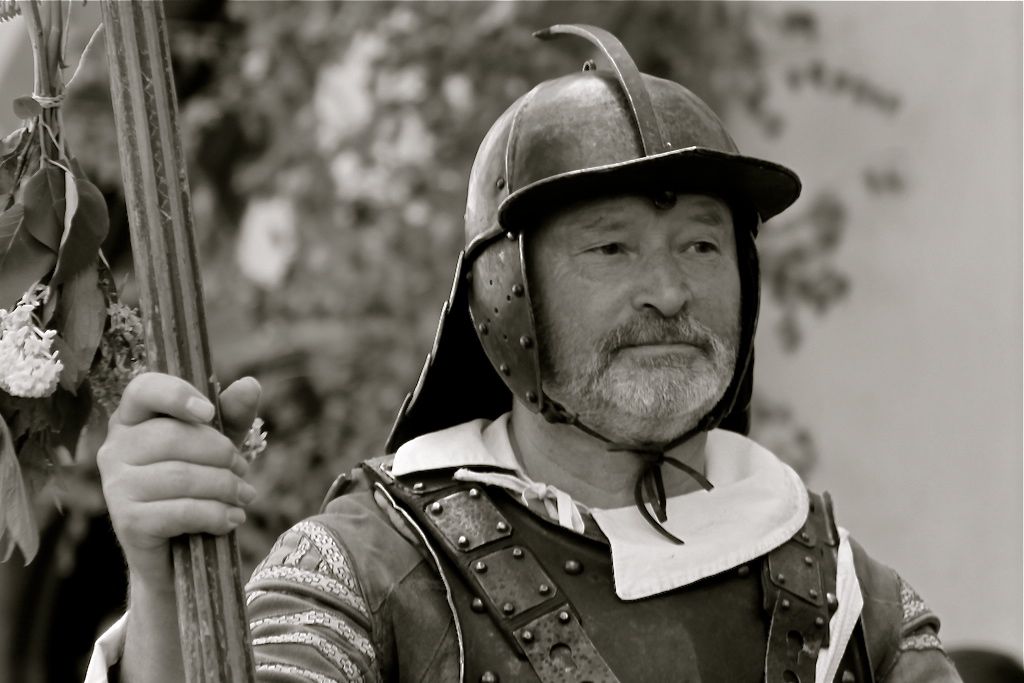
The next day took us to Rothenburg (wrote-en-berg) ob der Tauber. There are several Rothenburgs in Germany, so the “on the Tauber” refers to the river it sits on, differentiating it from the others. Our timing was perfect as this weekend was the Meistertrunk (Master Draught) Festival. It’s based on a fictional story of the town mayor winning a drinking contest to save the town. Regardless of the occasion, this is a great town for a medieval festival, as it’s probably Germany’s best-preserved walled town. The streets were alive with dancing, parades and hundreds of people in period costume. The streets were also full of brats and beer tents of course. It’s funny how the brats are so different from region to region. In Munich they’re white, in Nurnburg they’re the size of a small breakfast sausage, and in Rothenburg we had one that measured over two feet long. We had to share that one! Cole and I are happy to do more taste testing, but Angie is ready for some salad.


The Shepherd's Dance

Nürnberg

Moving on we headed south towards Bavaria. All the German autobahns are in perfect condition and a joy to drive. Cruising along at 100mph in our little rental, I was getting the doors blown off by the numerous BMW and Audi’s that rule these roads. Home base for the next three nights would be Bad Mergenheim. Not exactly the best-known town, but it sits along the romantic road and was fairly near to both the day trips we had planned. The funny thing is that when I booked this hotel on hotels.com, it came up at 12 euros per night for the whole family. It seemed a bit too low, so I called hotels.com customer service and they confirmed it was correct. When we checked they chuckled as the price of the suite we had booked sells for 192 euros per night, not 12. Never the less, they called hotels.com, took blame for the error, and checked us in. The hotel was much nicer than even the web listing portrayed and the kids were wondering why every place we stay couldn’t be like this. The room was beautiful with a large deck overlooking the enormous landscaped grounds. Every night when we returned from our sightseeing, a live orchestra would be playing in the band shell out back while the kids played in the pool. In the morning they served a breakfast buffet fit for kings (all included in the 12 euros of course).

But enough about our deal of the day, it’s on to Nürnberg. Probably best known as home to the infamous Nazi rallies, Nürnberg is a very pleasant city to explore. It's fairly large with around 500,000 people, but it’s treasures all lie within the old city center. By the time World War II was over, 90% of the old town had been destroyed. (Only Dresden suffered more damage.) Postwar architects choose to rebuild in the traditional style with a few modern amenities mixed in. A bonus for us was that when you visit any Nürnberg museum, the rest are complimentary when visited on the same day. So we started off at the Spielzeugmuseum (a big toy museum), full of vintage toys and interactive displays. After a walk up to Kaiserburg castle, it was on to the Albrecht Dürer House. Nürnberg’s most famous resident, this artist had his studio here for the last 30 years of his life. The kids got to create their own wood etching in his workshop and we learned how to work with an intaglio press as well. We finished on the outskirts of town at the Nazi Documentation Center and Rally Grounds. Hitler loved Nürnberg for many reasons. First it was centrally located in Germany and also considered to be the “most German of German cities”. It was also a place to legitimize his Third Reich, as the rallies were held within sight of the Kaiserburg Castle, a symbol of the “First Reich” (Holy Roman Empire). The massive grounds had buildings capable of holding 400,000 spectators, although some were never completed. With the onset of the war, funds were diverted from these projects to the war effort. The National Socialist German Workers' Party certainly grew in strength here, but the regime ultimately came to an end here as well. With the Nürnberg trials held in 1945, 21 Nazi war criminals stood trial. When the dust settled, 12 were sentenced to death by hanging, 6 sent to prison, and 3 acquitted.

The Holy Ghost Hospital, with this wing built over the river, dates from the 14th century.
Here are the kids getting help on their etchings.
Cole overlooking Zeppelin Field, from the same platform Hitler used to address the masses (over 250,000 at a time on this site).